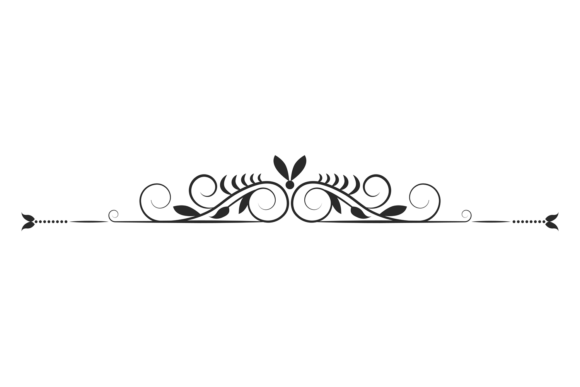
Decorative Header and Floral Ornament: The Classic Curled Divider
The digital design landscape is awash with imagery, but certain elements transcend fleeting trends, becoming foundational tools in the creator's toolkit. Among these enduring assets is the decorative header, particularly those adorned with floral ornamentation and the classic curled divider. More than just a visual flourish, this specific style—often delivered as isolated, versatile files like EPS, JPG, SVG, and transparent PNG—represents a bridge between classical artistry and modern digital efficiency. Its relevance today is not merely aesthetic; it's practical, responding directly to the needs of professionals, entrepreneurs, and hobbyists who seek to elevate their projects with a touch of curated elegance without the overhead of custom illustration.
The Anatomy of a Timeless Design Element
When we examine a decorative header with floral ornament, we are looking at a composition rooted in historical design principles. The "clas" or classic style typically refers to motifs inspired by Baroque, Rococo, or Victorian eras, where intricate scrollwork, floral garlands, and symmetrical curls were used to frame and dignify text. In its modern digital incarnation, this element is isolated on a white background, a deliberate choice that maximizes utility. This isolation means the designer receives a pure graphic—the elegant, curled divider with its floral accents—free from any locked context, ready to be placed over any color, texture, or photograph. The availability in multiple file formats is crucial: EPS for scalable vector editing, SVG for web-native implementation, high-resolution JPG for quick placement, and transparent PNG for effortless layering. This suite of options caters directly to varied modern workflows, from web development to print collateral.
Why Classic Ornamentation Is Experiencing a Digital Renaissance
Current trends in design show a fascinating pivot towards hybrid aesthetics. In a world saturated with minimalist flat design and geometric brutalism, there is a growing counter-movement that embraces detail, texture, and historical reference. This isn't about full-scale vintage revival, but rather about strategic accentuation. A decorative header with a classic curled divider acts as a sophisticated counterpoint. For a brand that is fundamentally modern in its messaging, such an element can introduce warmth, craftsmanship, and a sense of heritage. It signals attention to detail. This evolution is driven by changing user expectations; audiences now crave digital experiences that feel considered and human-centric, not sterile and purely functional. A well-placed floral ornament can break the monotony of a template-driven interface, creating a moment of visual delight.
Meeting the Needs of the Modern Creator and Business
The practical implications for users are significant. For the freelance graphic designer, having access to a high-quality, multi-format decorative header means they can rapidly prototype a client's certificate, invitation, or website masthead, adding perceived value without starting from a blank canvas. For the blogger or educator creating their own materials, these assets democratize beautiful design. They can download a transparent PNG and, with basic skills, create a professional-looking header for their PDF guide or course presentation. Entrepreneurs and small business owners leverage these elements to elevate their branding collateral—think of a floral-divider separating sections on a luxury product's packaging label or a service menu. The key is the isolation on white; it allows the small business owner to overlay the divider on their brand's specific color palette seamlessly, ensuring cohesion.
Strategic Application in Contemporary Projects
Understanding how to use this asset is where its value is fully realized. The recommendation is to use it as an accent, not a dominant feature. For example, a curled divider with floral ends might beautifully separate the headline from the body text in a wedding planner's digital brochure. An SVG version of the same element could be used as a subtle, scalable border on the hero section of a artisan coffee shop's website, loading quickly and adapting to any screen size. In print, an EPS file allows a magazine designer to tweak the vector paths to perfectly match the spacing in a featured article's title. The mistake to avoid is overuse; one strong, classic decorative header per project often suffices to establish the desired tone. It's about creating a focal point of elegance.
The Technical Advantage of Multi-Format Accessibility
The offering of this decorative header in EPS, JPG, SVG, and transparent PNG formats speaks directly to the fragmented yet interconnected nature of today's creative technology. A web developer might prefer the SVG for its responsiveness and small file size. A marketing professional preparing a quick internal PowerPoint might drag-and-drop the JPG. A print specialist requires the EPS for crisp, unlimited-resolution output. This multi-format strategy ensures the asset is helpful across the entire project lifecycle, from initial web mockup to final printed piece. It respects the reality that professionals often work across software ecosystems and need assets that are truly portable. This practicality underpins its popularity in stock asset libraries and design marketplaces.
Integrating Classic Dividers into a Forward-Looking Practice
Looking forward, the role of such ornamental assets is likely to solidify rather than diminish. As automation and template use increase, the strategic insertion of uniquely beautiful, human-touched elements becomes a key differentiator. The floral ornament and curled divider offer a pre-made slice of that uniqueness. For the content creator, it can frame a particularly important blog post, signaling its value. For the educator, it can add a formal, celebratory tone to a certificate of completion. Its application is limited only by imagination, but grounded by its classic form which ensures it never feels erratic or overly trendy. The insight is clear: in the pursuit of digital efficiency, we must not abandon ornament. Instead, we can leverage these isolated, classic decorative headers to inject calculated beauty, proving that detail and practicality can coexist in the modern workflow.
Ultimately, the decorative header with floral ornament represents more than a file download. It is a tool for emotional design. It allows the busy professional to communicate care, the solo entrepreneur to present polish, and the hobbyist to achieve a result that feels authored, not assembled. By choosing the right format for the task—using the scalable vector for editable print work, the transparent PNG for digital compositing—you harness both the history of design and the flexibility of the present. This classic curled divider, isolated and waiting on a white background, is not a relic. It is a ready participant in your next project, ready to add a paragraph of visual elegance where words alone might not suffice.